
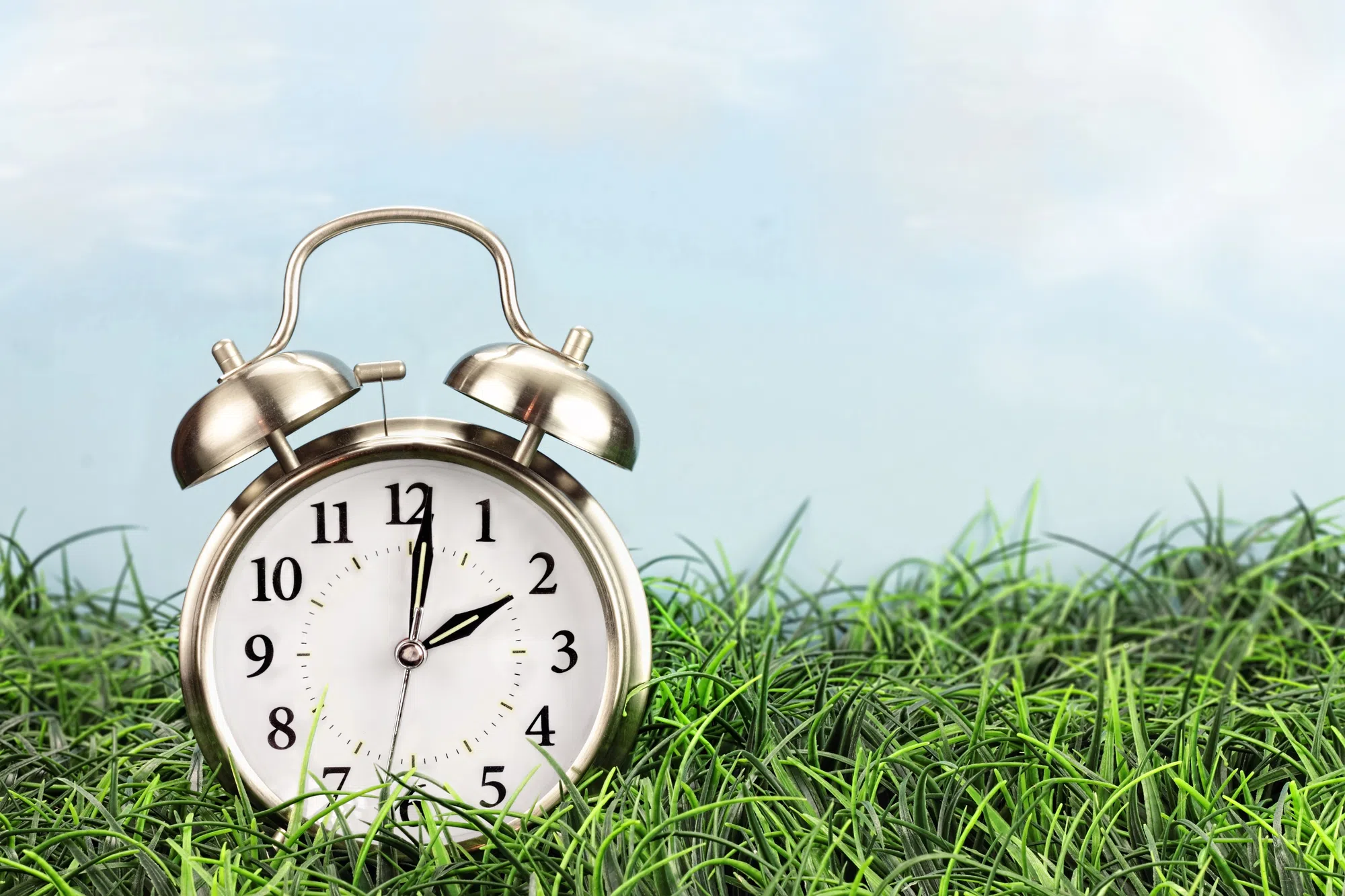
HIGH POINT, N.C. (WPTF) – This weekend, we move clocks back one hour and return to daylight savings time, but respondents to a new poll say they want time to stay the same.
In a recent High Point University Poll, 46% of adult North Carolinians favored switching to year-round daylight-saving time, which would result in more evening daylight. However, 21% of North Carolinians favored changing to year-round standard time, which would result in an earlier sunrise and less evening daylight.
Nearly a quarter (23%) of North Carolinians preferred keeping the current system, where time jumps ahead an hour in the spring and falls back an hour in the fall to preserve daylight hours. Just over one in 10 (11%) felt unsure about this topic of switching between standard time and daylight-saving time, which starts again at 2 a.m. on Sunday, March 8.
The shift in time for daylight saving can impact the body’s natural cycle, said Dr. Racquel Ingram, founding dean of HPU’s Teresa B. Caine School of Nursing.
“Switching between daylight saving time and standard time can disrupt the body’s circadian rhythm, affecting both physical and mental health,” Ingram said. “The time change increases the risk of sleep disturbances, which can lead to fatigue, depression, cardiovascular events and other health issues. These effects are typically most pronounced during the first few weeks after the shift, making advance preparation essential for a smoother adjustment.”
In March of 2025 (HPU Poll 110), similar results were reported, with 48% of respondents indicating they wanted to switch to year-round daylight-saving time, 23% preferring year-round standard time, 22% desiring to keep the current system, and 7% were unsure.
Likewise, HPU Poll 94 reported in March of 2023 that 46% wanted to change to year-round daylight-saving time, 20% wanted to change to year-round standard time, 21% preferred to keep the current system, and 13% were unsure.
Dr. Christopher de Bodisco, associate professor of economics in the Phillips School of Business, said the costs of time changes primarily focus on the transitions: schedule adjustments and disruptions to sleep patterns and circadian rhythms with potentially negative health effects.
“The benefits of time changes result from centering our activities around daylight hours and are not as easily measured,” de Bodisco said. “They include increased exposure to evening sunlight in the spring through fall seasons due to daylight saving time, and also reducing winter morning hours spent before sunrise when switching back. The combination increases opportunities for outdoor activities, which have positive health effects, while reducing the winter morning hours spent in the dark, with associated safety improvements.”
Fire safety officials say the time change is also a good time to check smoke and carbon monoxide detectors and change batteries as needed. Since the time change is at 2 a.m. Sunday morning, people are advised to reset clocks before going to be Saturday night.