
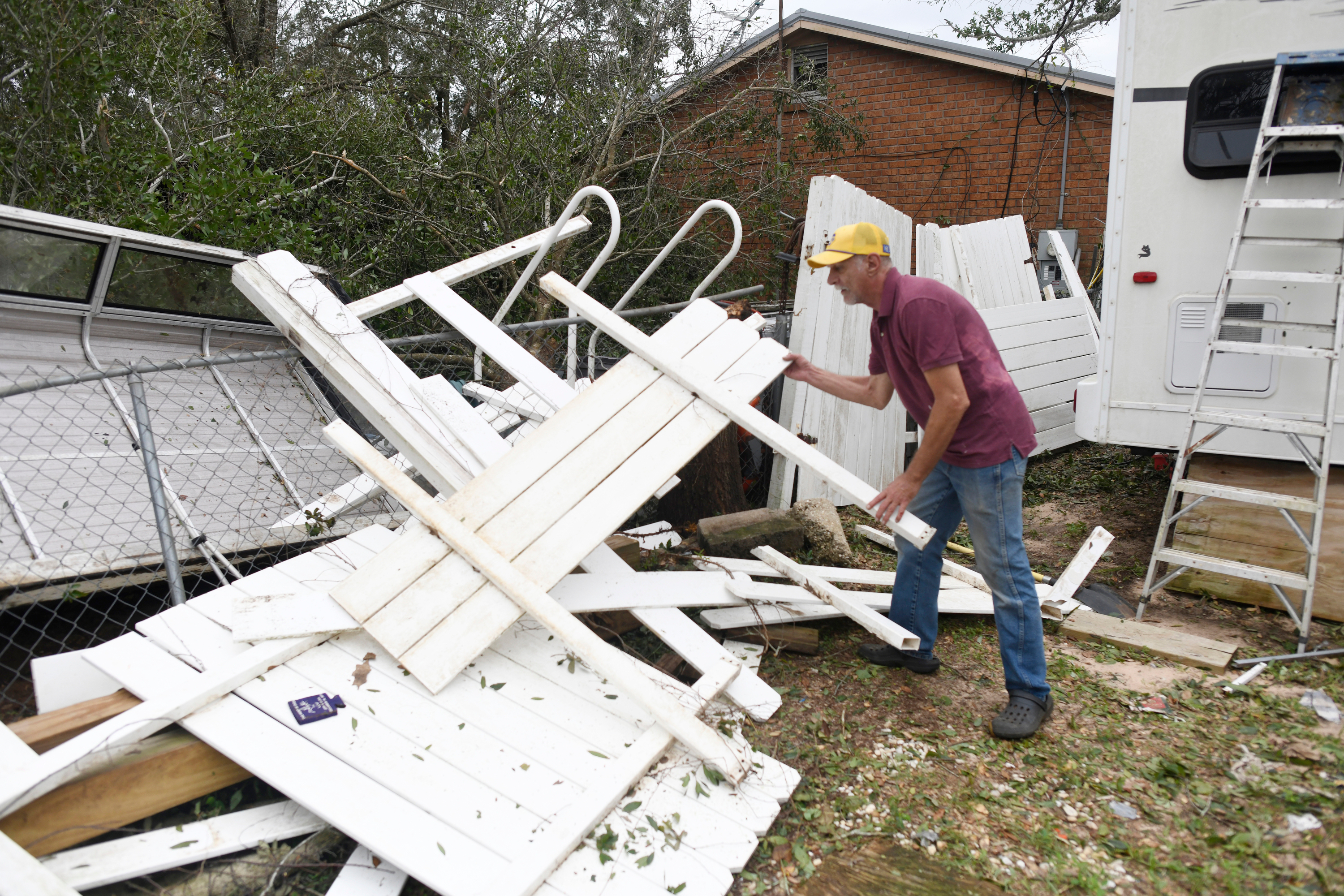
RALEIGH, N.C. (NCN News/AP) – Cleanup and assessment is underway after severe storms tied to the remnants of Hurricane Isaias churned up at least five tornadoes in central North Carolina and caused flash flooding in other parts of the state.
In western North Carolina, rivers overflowed as heavy rainfall raised the risk of flash and urban flooding, according to the National Weather Service. It said tornadoes were possible in parts of Virginia and North Carolina as well as dangerous surf and rip current conditions along the Gulf and southeastern Atlantic coasts.
At least four deaths were linked to Isaias, the first hurricane of the Atlantic season, which came ashore as a Category 2 hurricane Friday near Destin, Florida, a Gulf Coast vacation spot filled with high-rises and tourist shops. The storm then roared into Alabama with tropical-force winds before heading farther north.
In Burke County, an unhoused male and female were camping when floodwaters from the Catawba River caught them off guard. They were rescued, along with their dog, according to a spokesperson for the county emergency management agency. Separately, a woman trapped inside her car in floodwaters was freed outside of Morganton.
In McDowell County, just west of Burke County, first responders said they dealt with five landslides and voluntary evacuations overnight Saturday into Sunday as they responded to flooded roads and streams overflowing their banks.
Nearly a dozen local weather stations in the western North Carolina county reported torrential 24-hour rainfall totals from about 5 inches (13 centimeters) to as much as 9.57 inches (24 centimeters) at the fire/rescue station in Enola. The weather service said rainfall was diminishing in the area but that rapid river rises and flooding remained possible.
According to multiple media reports, there are least three touchdowns in Wake County, including in an northeast section of Raleigh and several others to south and east in areas such as Clayton and Fayetteville. Formal assessments will take place early this coming week.
In a Sunday afternoon release, Governor Josh Stein said: “We are grateful to the first responders and emergency management officials who worked through the night to keep people safe. Our state’s public safety community, including North Carolina’s Search and Rescue Teams, stepped up to meet the moment”
Overnight, the state saw impacts from Isaias, especially in western North Carolina, where heavy rains led to flooding, a few rescues, and several landslides. North Carolina Emergency Management and the State Emergency Response Team supported local emergency management offices in public notification and coordinating response efforts overnight.
At its peak, power outages were just over 22,000 across the state, with about half of those in the mountains. Just over 3,000 outages were reported as of 8 p.m. Sunday night (Oct.11).
More than 2,300 NCDOT employees mobilized across the state to ensure thousands of signs, trucks, and debris-clearing equipment were ready and in good working order ahead of this storm. Crews have begun assessing damage where it’s safe to do so and are working to get roads open as swiftly as possible.
State Emergency managers remain in contact with their local partners to assess any needs they may have. Pre-positioned swift water rescue teams and search and rescue teams remain ready to mobilize if needed. NCDOT continues to encourage North Carolinians to stay off the roads, unless necessary.
Hurricane-force winds in the Florida Panhandle blew the roof off a Pensacola hotel. The storm flattened a boathouse in Destin and ripped away part of the facade of a high-rise in Panama City Beach.
At a church in Pensacola where the United Cajun Navy was distributing supplies Sunday morning, a line of hundreds of cars stretched around the block. Yvette Haro said she arrived at 5 a.m. after being turned away the previous day because supplies had run out.
With a 10-year-old son and a 5-year-old daughter at home, she said it’s hard to go to stores and wait in long lines. She was looking for water, paper towels, toilet paper and cleaning supplies.
While her home didn’t suffer any damage, the loss of electricity was making things difficult, Haro said. “The biggest thing is our food going bad,” she said.
Fewer than 300,000 customers remained without power Sunday evening in the Florida Panhandle and southern Alabama, according to poweroutage.com. Florida Gov. Ron DeSantis said he expected nearly everyone to have it restored by Tuesday night.