
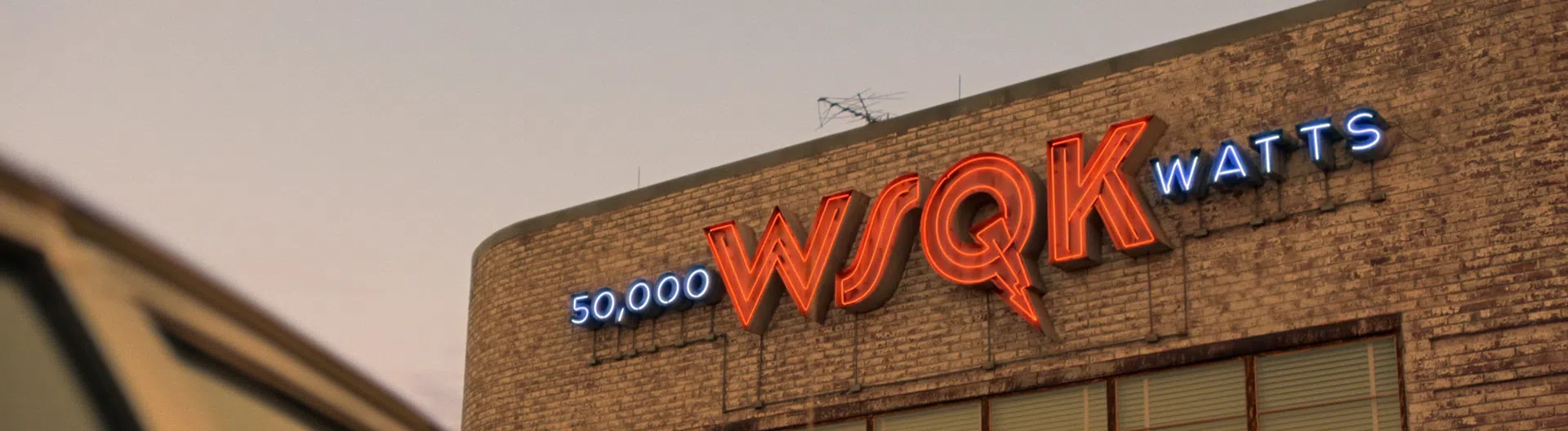
The Real Radio Station Behind Stranger Things’ WSQK
Spoiler note: While every effort has been made to minimize plot spoilers, this article includes discussion and images from Stranger Things that may reveal minor details from Season 5.
By Josh Ellis
WSQK is a fictional FM radio station in the world of Stranger Things. But the building and tower that house it on screen are a detailed replica of a very real place: the WPTF-AM transmitter site.
That isn’t a figure of speech. And it isn’t a coincidence.
Television and film are full of sets that borrow a little from here and a little from there. WSQK isn’t one of them.
What appears on screen in Stranger Things is not a generic “radio station” environment. It is a purpose-built facility with a specific kind of layout and a specific relationship between the building and the tower behind it. Those choices don’t come from imagination alone. They come from a real-world reference.
That reference is the WPTF transmitter site.
Before going any further, it’s important to be clear about one thing: this is an active, high-power transmission facility. It is not safe for casual visits and it is not accessible to the public. This article exists precisely because of that reality.
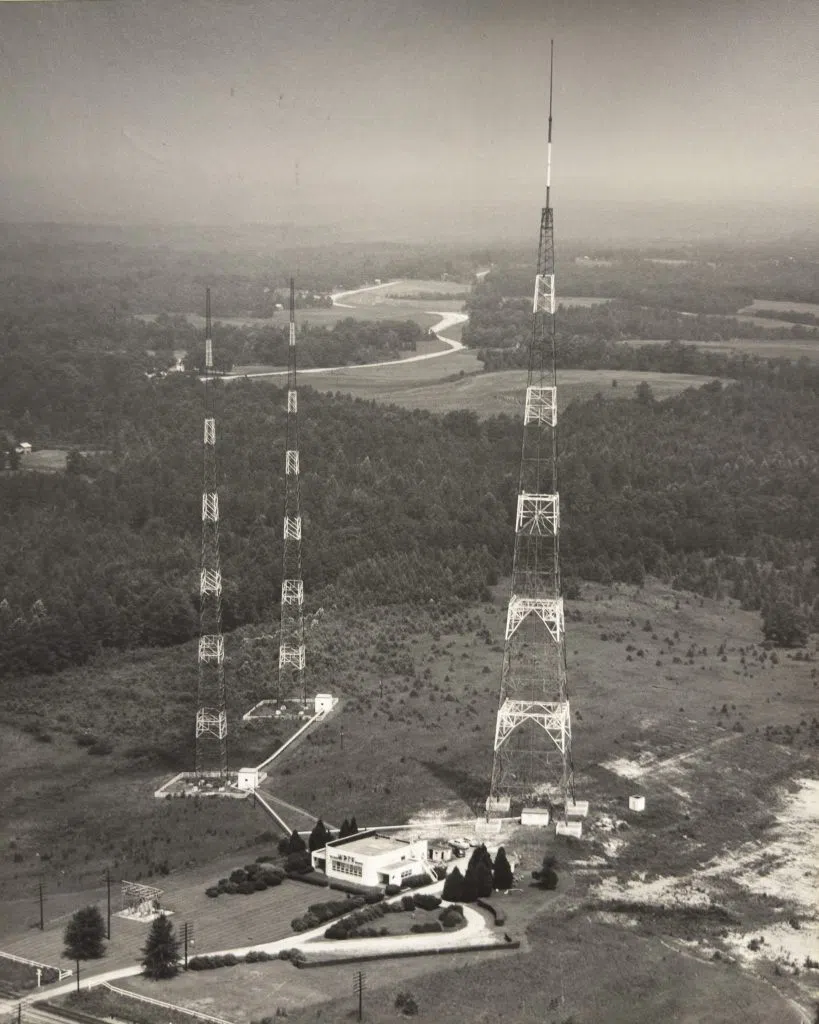
An aerial view of the WPTF-AM transmitter site decades ago. Much of the open land surrounding the towers has since given way to homes, roads and neighborhoods, while the site itself has continued operating in place. (WPTF/Wyman Viall Photography)
WPTF is more than 101 years old and is the first radio station in the Raleigh-Durham market. Like most high-power AM stations, it relies on a dedicated transmitter site located away from population centers, where large antennas and the supporting electrical infrastructure can operate safely and efficiently.
The WPTF transmitter site was built for function, not visitors. It is a working industrial facility designed to house high-power transmission equipment and support the tower and antenna system that carry WPTF’s signal across North Carolina. For safety and operational reasons, it is not open to the public and has never been a place for tours.
How This Story Started
At some point during the production of Stranger Things Season 5, the show’s art department began work on a radio station set that would become the fictional WSQK.
The production team has not publicly described how the WPTF transmitter site was first identified, but in 2023 they contacted Curtis Media Group to explore the possibility of visiting the facility. After initial conversations with senior leadership, arrangements were made for members of the engineering team to escort the production to the WPTF transmitter site.
In March 2023, members of the production visited the site over two days to photograph the buildings, take measurements and document the layout, equipment and many of the small details that define a working transmitter facility. They also acquired a number of pieces of legacy broadcast equipment for reference and possible use in set construction.
From that point forward, CMG Vice President of Engineering Allen Sherrill remained in contact with the production, answering occasional questions about equipment and operations as the WSQK set took shape.
The Exterior, the Tower and the Building Itself
The easiest place to see the connection between WSQK and the real WPTF site is the exterior.
-
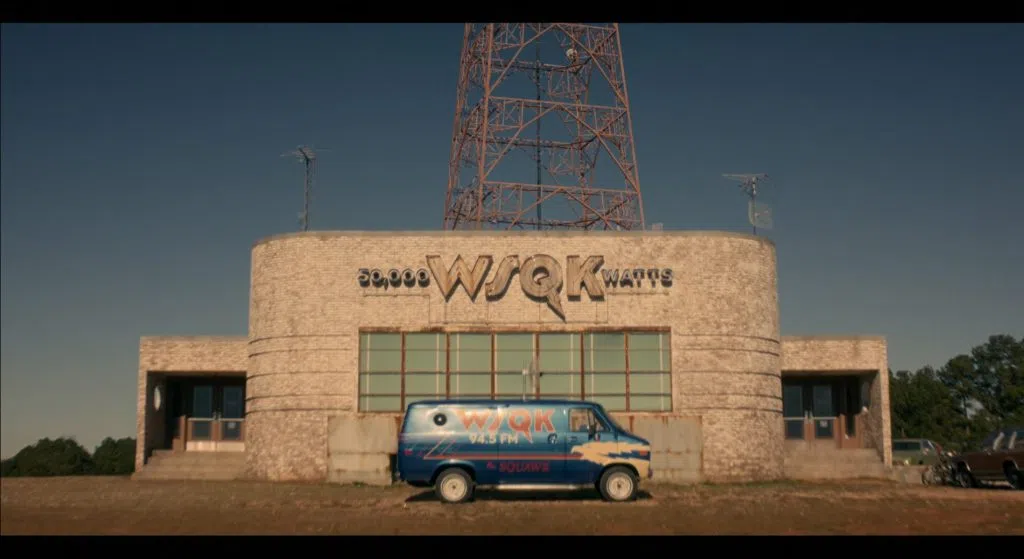
- This screenshot from Stranger Things highlights the WSQK transmitter building and tower, framed to emphasize the distinctive footprint and the relationship between the structure and the steel lattice behind it. (Netflix)
-
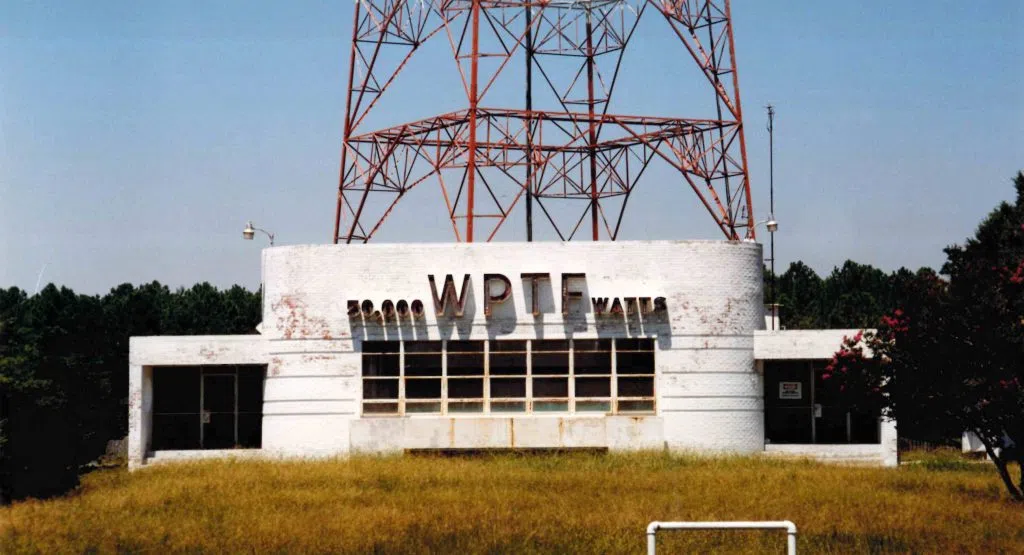
- The front of the WPTF transmitter building, showing the distinctive curved façade and signage beneath the tower — details closely echoed in the fictional WSQK facility seen in Stranger Things. (WPTF archive)
-
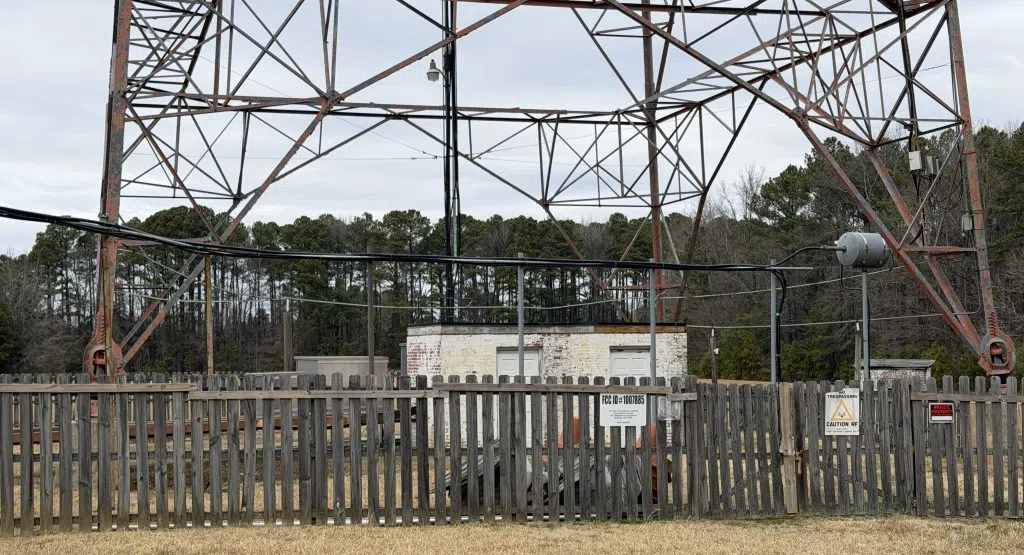
- The real WPTF tower, viewed from ground level, showing the same geometric steel pattern that inspired the WSQK set design. (Josh Ellis)
-
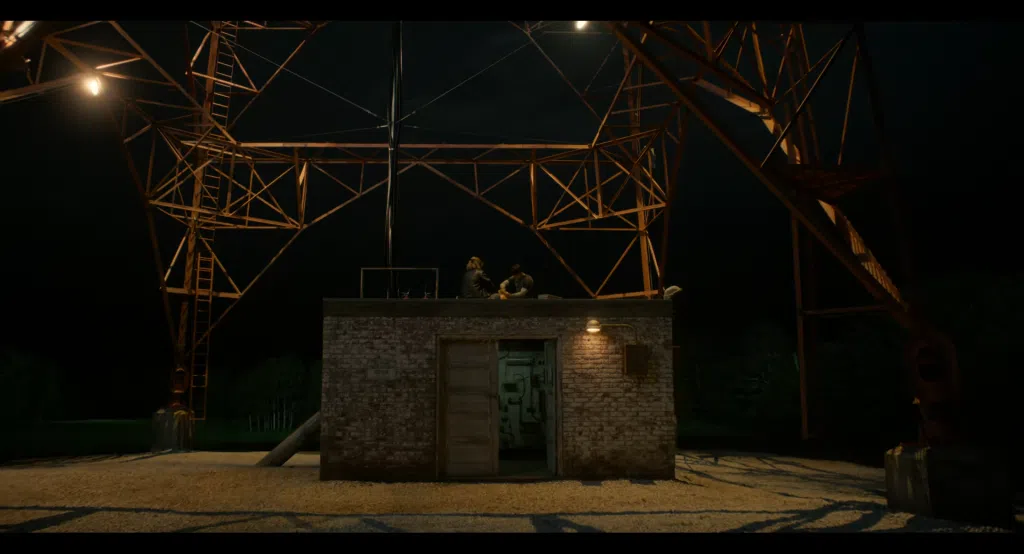
- In this screenshot from Stranger Things, Robin and Will take refuge on the roof of the WSQK shed, framed by the distinctive steel lattice of the tower overhead — a perspective that mirrors real views from the base of the WPTF tower. (Netflix)
Placed side by side, the WSQK building and the WPTF transmitter building share the same basic footprint and proportions. The relationship between the building and the tower behind it is also the same. This is not just a general resemblance. The similarities line up in ways that are difficult to explain as coincidence.
Several scenes in Stranger Things frame the WSQK tower from the ground looking straight up, or from within the structure itself, emphasizing the repeating geometric pattern of the steel lattice. Those same perspectives exist at the real WPTF tower, and the match in structure and geometry is immediately apparent when the two are compared.
-
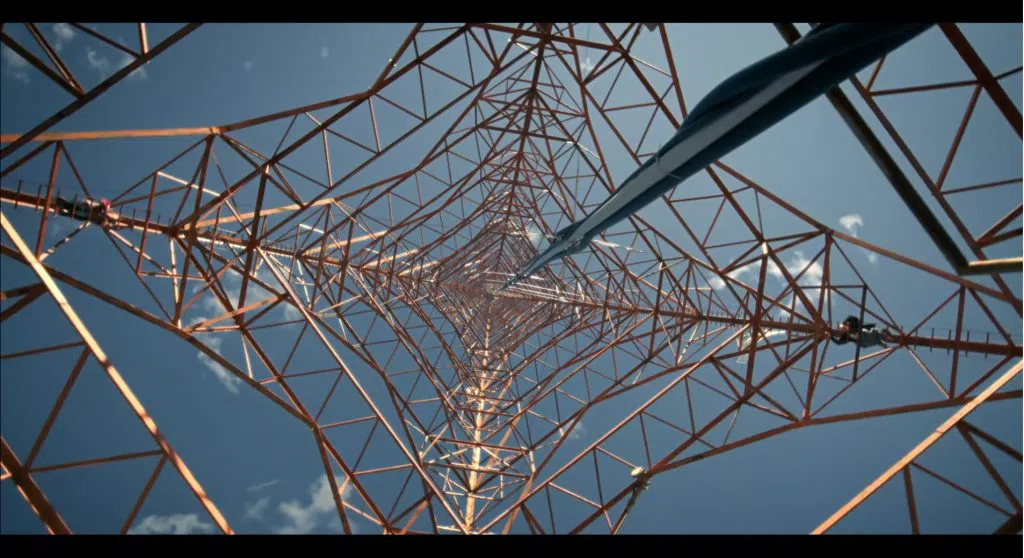
- Screenshot of WSQK’s tower as seen in Stranger Things, filmed from the base looking straight up. (Netflix)
-
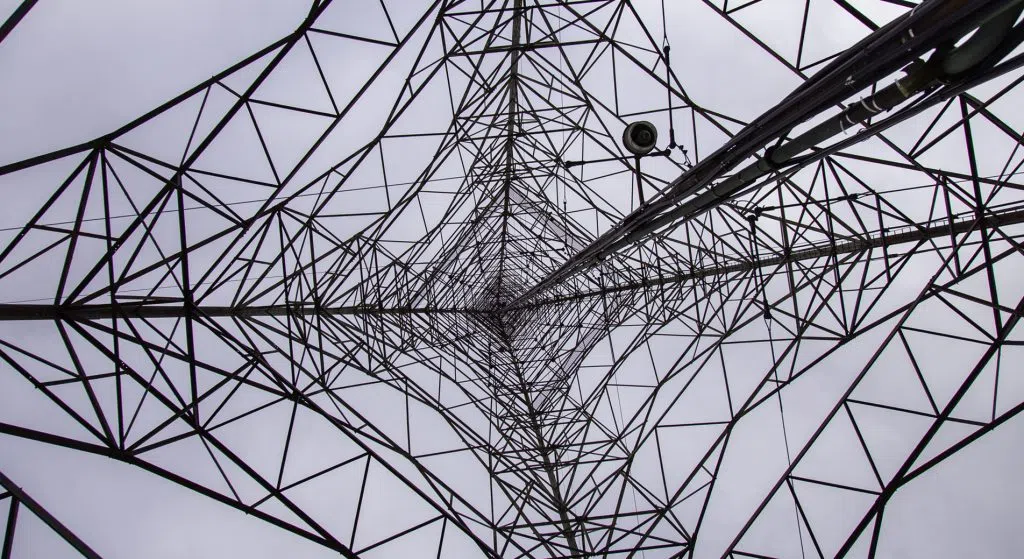
- The WPTF-AM transmitter tower photographed from a similar angle, illustrating how closely the show mirrored a real broadcast structure. (Josh Ellis)
Even small, unglamorous details line up. On the back of the real WPTF building, a mismatched roof-edge tile from a repair more than 20 years ago still overhangs the parapet. In corresponding views of the WSQK exterior, that same odd roofline detail appears to have been recreated.
The Interior and the Layout
Once the story moves inside WSQK, the connection to a real transmitter site becomes even clearer.
What Stranger Things shows is not a conventional “radio station” with studios and production rooms. Instead, WSQK is depicted as a utilitarian facility: a main equipment room, a small control or booth area and supporting spaces arranged around them. That layout closely matches how real transmitter buildings, including WPTF’s, are organized — down to small architectural details like the wood trim and molding around the control booth windows, which appear to have been carefully replicated on the WSQK set.
-
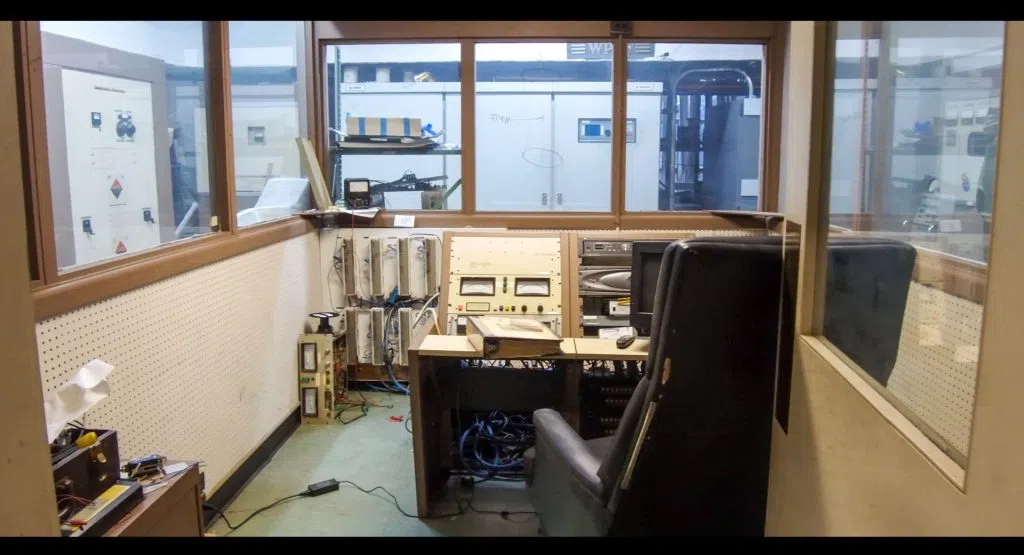
- The real control booth at WPTF, centered inside the main transmitter room, providing engineers a direct line of sight to the high-power equipment — a layout closely echoed by the WSQK control booth seen in Stranger Things. (Josh Ellis)
-
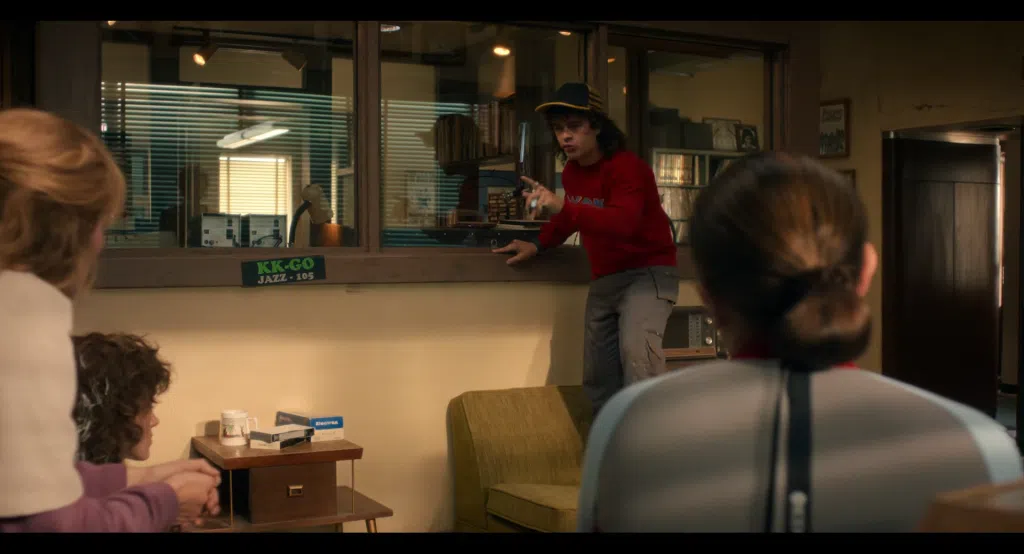
- This screenshot from Stranger Things shows inside the fictional WSQK transmitter building as the group regathers beneath the windowed control booth. (Netflix)
In the series, much of the action takes place in a large main area dominated by equipment racks and cabinets, with a small windowed booth set in the middle of the room. That same basic spatial relationship exists at the WPTF transmitter site.
The goal of a transmitter site is not comfort or aesthetics. It is to keep high-power equipment running reliably. That purpose shows in both places. The rooms are industrial, functional and built around the needs of the machinery.
-
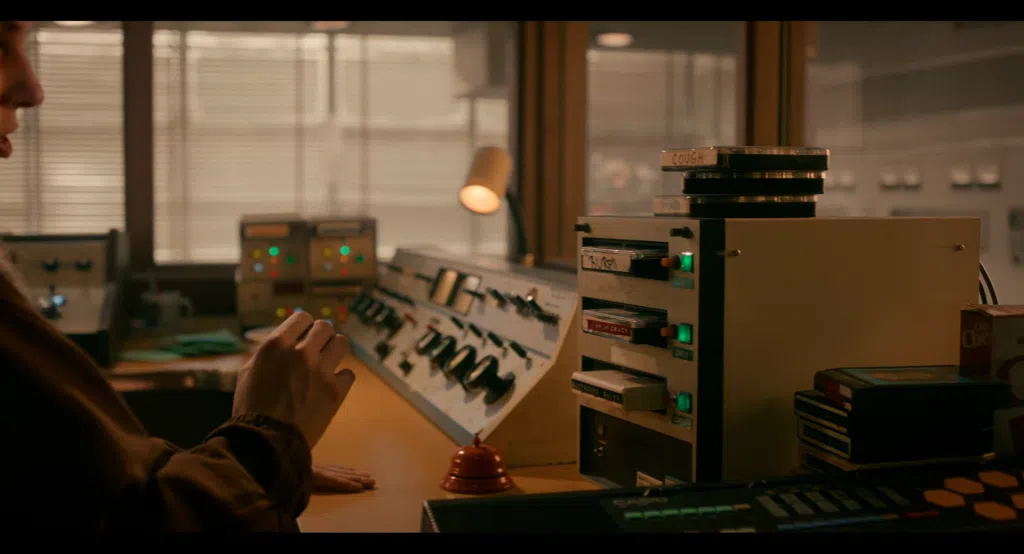
- This Stranger Things screenshot highlights the vintage Harris cart machines once used in real radio studios, the kind of hardware that inspired the authentic look of WSQK’s control room. (Netflix)
-
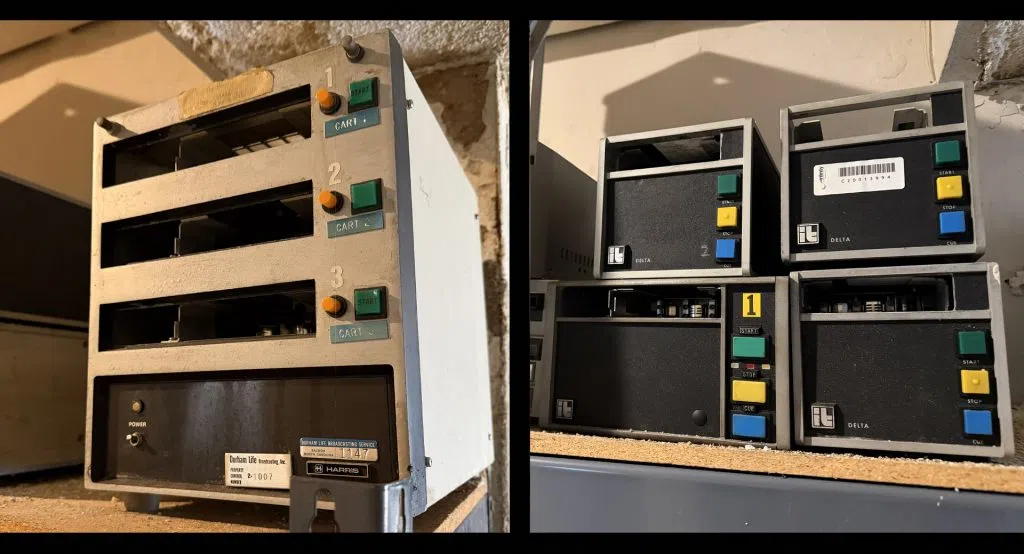
- Photos of similar cart-style playback units inside the WPTF transmitter site and used at many stations like WPTF. (Josh Ellis)
There are, of course, differences. The WSQK set is arranged to give the camera room to move and the actors space to work. The real WPTF site is arranged for engineers and equipment. But the underlying idea of the space — what kind of building this is and how it functions — is the same.
This is not a broadcast studio. It is a transmitter building. And that distinction is central to why WSQK looks the way it does.
The Basement and the Infrastructure
The lowest level of the WSQK building is where the show stops treating the location like a convenient hideout and starts treating it like what it really is: a piece of industrial infrastructure.
In Stranger Things, the basement is defined by utility first. Concrete floors. Exposed pipes. Electrical panels lining the walls. A narrow, winding metal staircase that exists to move people between levels, not to make a visual impression.
-
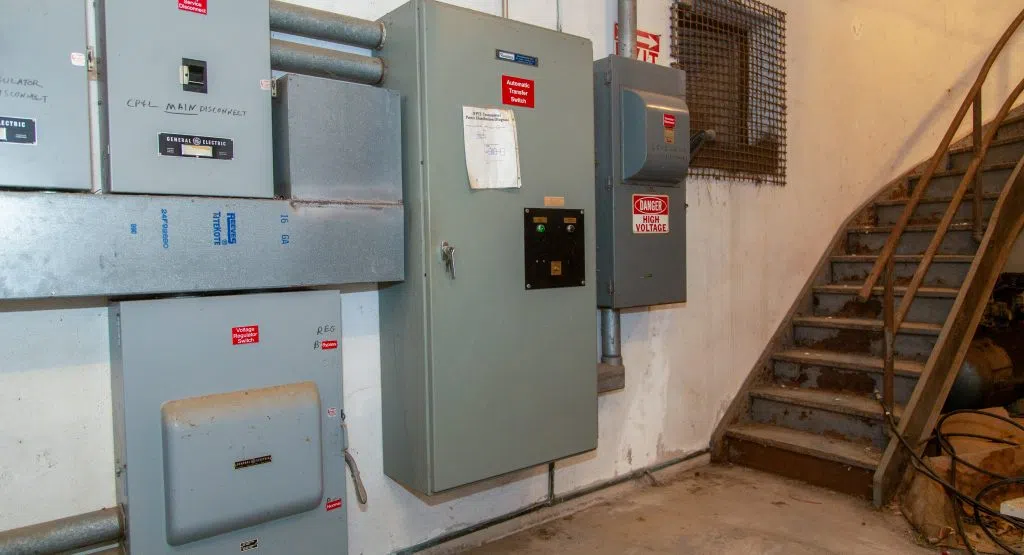
- Electrical panels and transfer switches line the basement of the WPTF transmitter site, where incoming power is distributed and controlled — the same kind of industrial infrastructure that Stranger Things faithfully recreated in the WSQK basement scenes. (Josh Ellis)
-
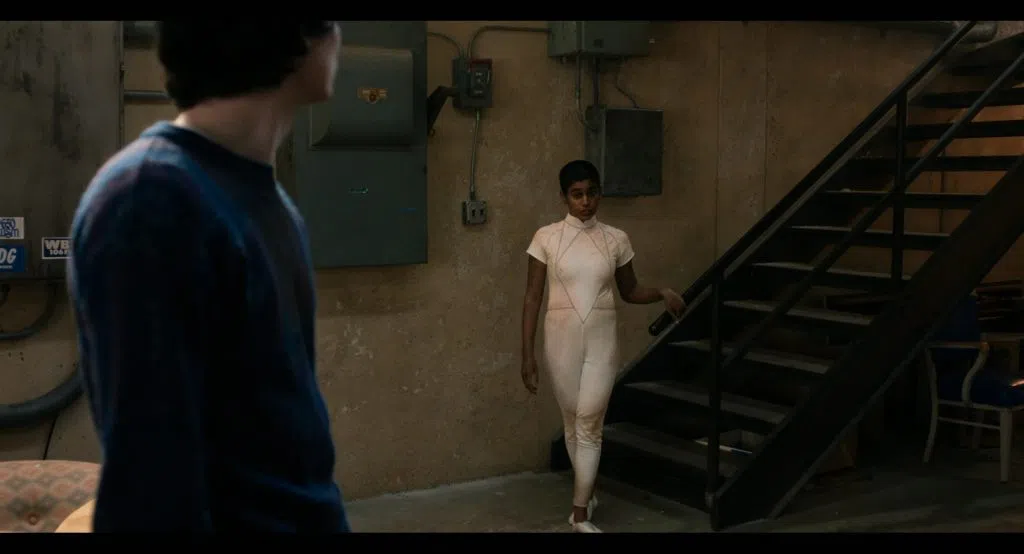
- Stranger Things screenshot showing utilitarian metal stairway that connects the WSQK basement to the transmitter room above – mirroring the same winding steps found inside the real WPTF transmitter buildings. (Netflix)
The real WPTF transmitter site looks the same for the same reason. This is where power enters the building and gets distributed. This is where breakers, disconnects and safety systems live. It is not a space meant for people to linger. It exists to keep very expensive, very unforgiving equipment running without interruption.
What makes the match striking is not any single prop or piece of scenery. It is the logic of the space. The way the walls are used. The way the electrical gear is grouped. The way circulation paths are tucked into corners because moving people is secondary to moving power and cables.
Once again, the show does not just capture the look of a transmitter site. It captures the priorities of one.
The Transmitter: A Star in Its Own Right
For anyone who has spent time around broadcast engineering, the transmitter is usually the most substantial and most consequential object in the room. Stranger Things treats it that way as well.
The large machine seen in WSQK is not a generic prop meant to suggest “something technical.” It is clearly modeled on real high-power AM broadcast transmitters, including the Continental 317C2 transmitter that was installed at WPTF in 1982. The meters, the cabinet windows, the control knobs and the warning labels all follow the visual logic of real broadcast equipment.
This is not just a matter of size or atmosphere. The WSQK transmitter is built to look like a specific kind of machine, laid out the way such machines are actually laid out and presented in working transmitter sites.
-
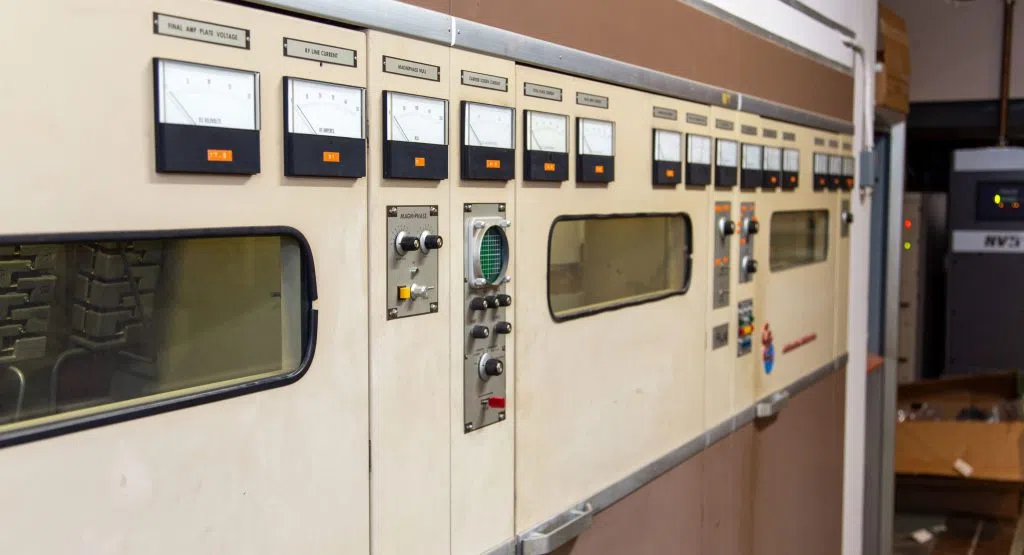
- Continental 317C2 AM transmitter at the WPTF transmitter site. The high-power tube transmitter remains in place today and served as a direct visual reference for the WSQK equipment built for Stranger Things. (Josh Ellis)
-
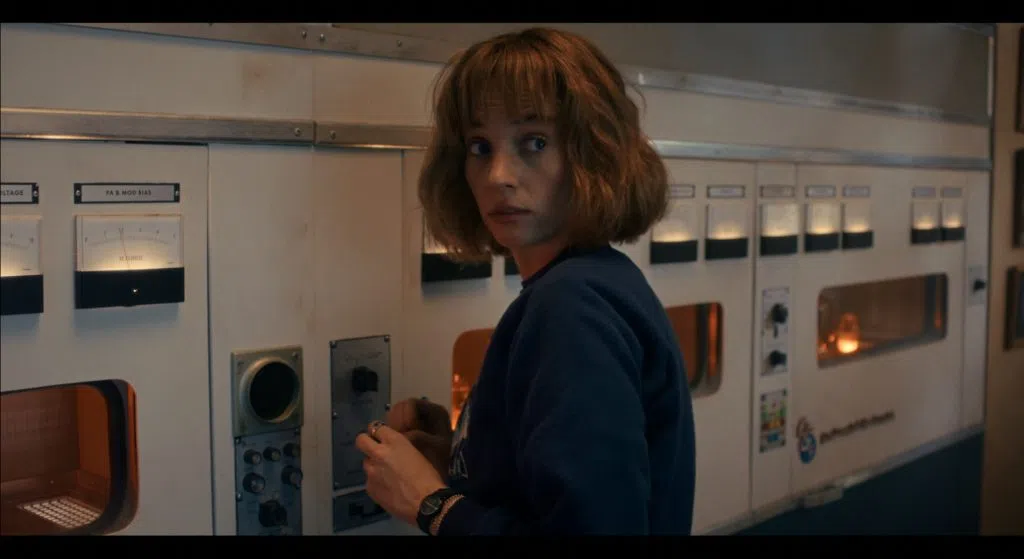
- A screenshot from Stranger Things showing the WSQK transmitter. The layout of the meters, control knobs and cabinet windows closely mirrors the real Continental transmitter used at WPTF, reflecting the production’s attention to authentic broadcast hardware. (Netflix)
Placed side by side with the real WPTF transmitter, the resemblance is not abstract. It is structural.
Once again, the show is not borrowing the idea of a transmitter. It is borrowing the look and organization of a real one.
Why WPTF?
The production has not publicly explained why the WPTF transmitter site was selected as a reference, and we can only speak to what is visible on screen and what we experienced directly.
What can be said with confidence is that the WPTF site looks like what it is: a working, industrial broadcast facility that was built to do a job and has spent decades doing it. It is not a showplace. It is not a museum. It is a piece of infrastructure.
That quality — the fact that the building and tower exist for function first and appearance second — is exactly what makes the space feel believable on screen. It looks the way real transmitter sites look, because it is one.
The Antenna: A Real Artifact on Screen
One of the most striking pieces of equipment seen in the WSQK scenes is not just inspired by a real object. It is a real object.
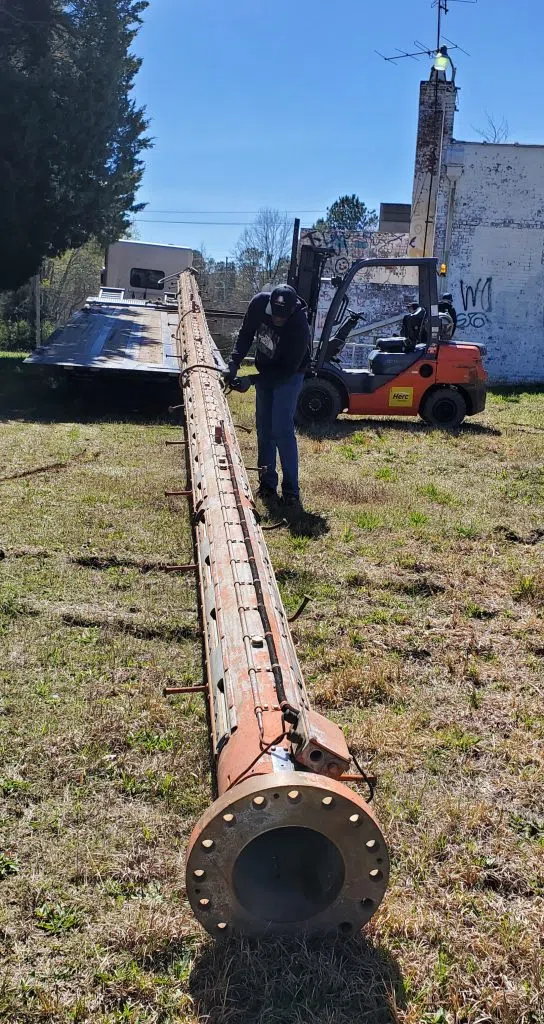
The former RCA TFU-30JDA UHF television broadcast antenna is loaded onto a truck outside the WPTF transmitter site on March 15, 2023. (WPTF)
The antenna that appears in several key moments of Stranger Things — including the finale — is an actual broadcast antenna that once served a North Carolina television station.
It is an RCA TFU-30JDA UHF television broadcast antenna, originally installed in 1968 on a tower near Chapel Hill for WRDU Channel 28, a then-new Durham television station. That station later became WPTF-TV and is now WRDC.
The antenna remained in service for roughly a decade before the station moved its operations to a different tower near Apex. After it was removed from the Chapel Hill tower, the antenna eventually found a second life stored at the WPTF transmitter site, placed behind the transmitter building.
-
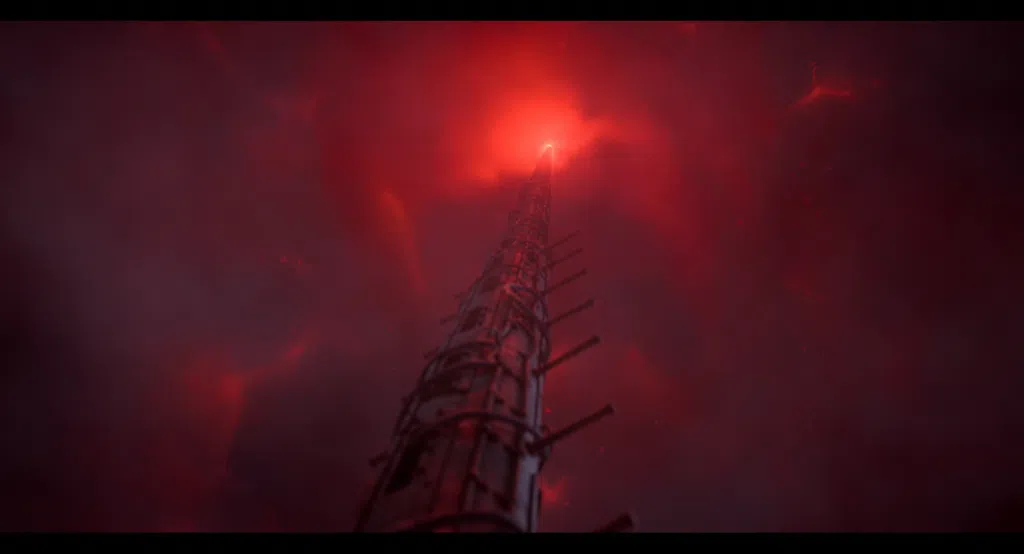
- In this Stranger Things screenshot, the WSQK tower becomes something far more ominous in the Upside Down. Beneath the visual effects, the tower’s geometry and scale are rooted in real broadcast infrastructure. (Netflix)
-
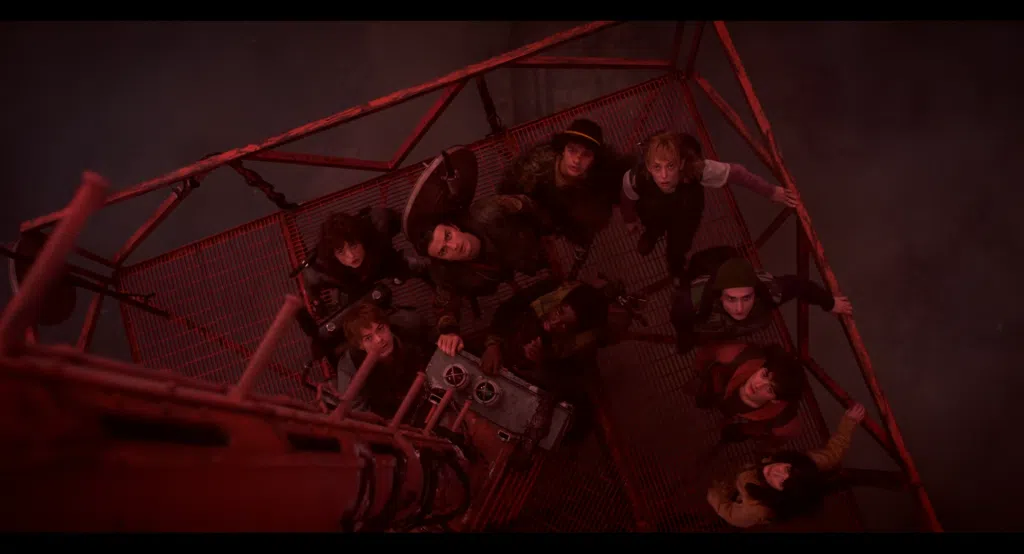
- In this Stranger Things screenshot, the WSQK tower becomes something far more ominous in the Upside Down. Beneath the visual effects, the tower’s geometry and scale are rooted in real broadcast infrastructure. (Netflix)
Decades later, that same piece of hardware was provided to the Stranger Things production and incorporated directly into the WSQK tower structure.
This is not a replica or a prop built to look old. It is a real piece of broadcast infrastructure, designed for real-world use, repurposed for a fictional story.
1986 and Today
WSQK exists in the world of Stranger Things in 1986. That matters, because a real transmitter site in 1986 did not look the way one does today.
At the WPTF transmitter site, the Continental 317C2 transmitter is still in place, still functional and still connected to the site’s backup generator. It is no longer the primary source of WPTF’s signal, but it remains a working part of the facility.
-
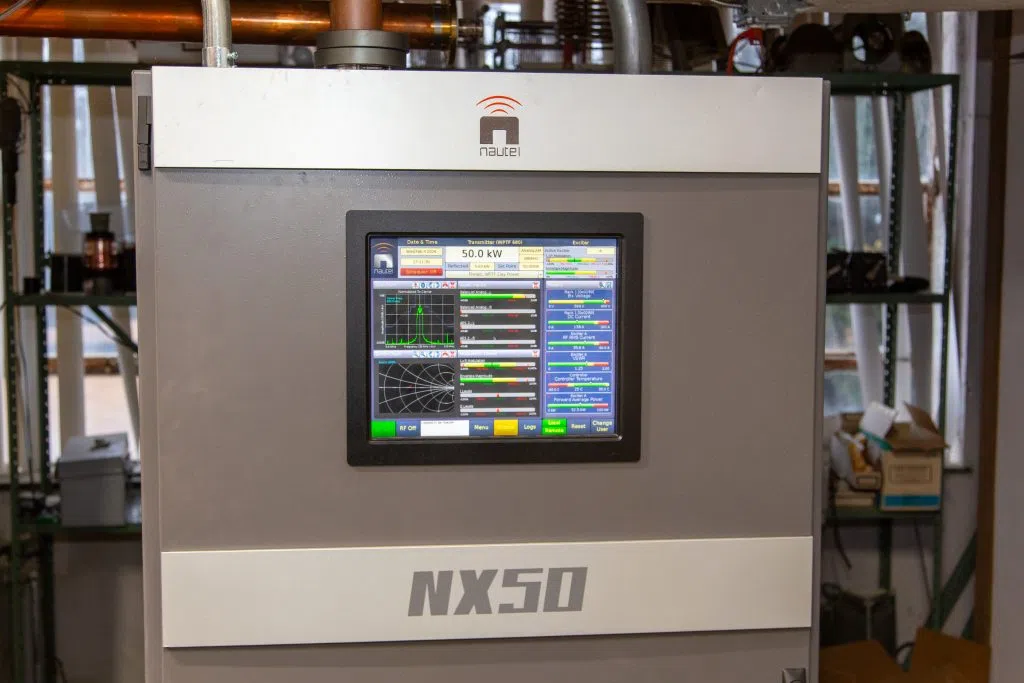
- Modern side of the WPTF transmitter plant: a Nautel NX50 50,000-watt AM transmitter, the current workhorse sending the station’s signal across North Carolina. (Josh Ellis)
Today, WPTF’s main on-air signal is carried by a newer digital transmitter with modern signal processing and safety systems. That equipment did not exist in 1986.
What the WSQK set shows is not a modern transmitter site. It shows a period version of one.
What the Show Changed
As close as WSQK is to a real transmitter site, it is still a television set.
Some spaces are larger than their real-world counterparts. Some layouts are simplified. Some equipment is arranged to make scenes easier to stage and easier to film. That is normal and expected in any production.
-
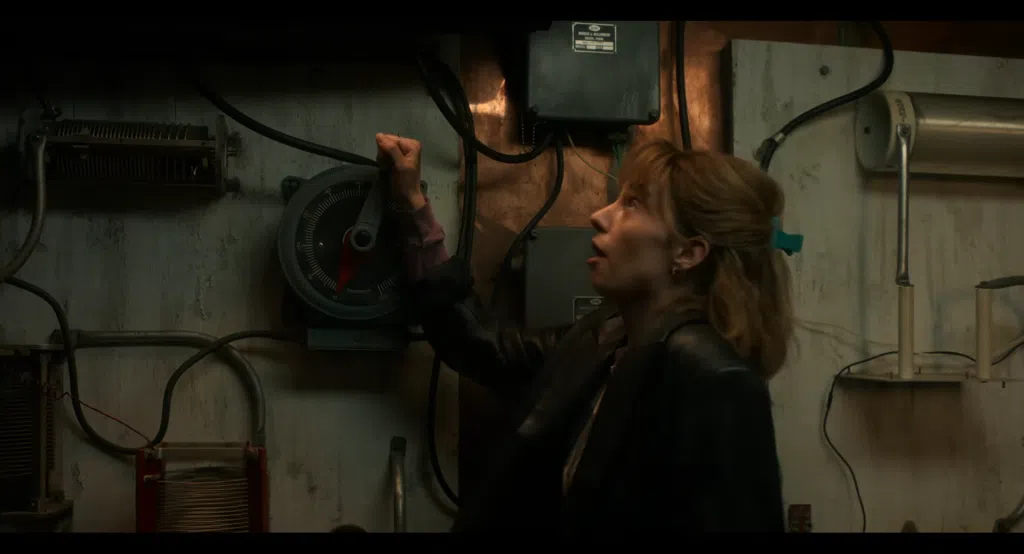
- Screenshot from Stranger Things showing inside the WSQK tower shed, where characters interact with electrical and RF equipment that reflects an FM broadcast facility. While the layout and industrial logic closely mirror WPTF’s AM transmitter site, some components differ by necessity, reflecting the technical differences between FM and AM transmission. (Netflix)
-
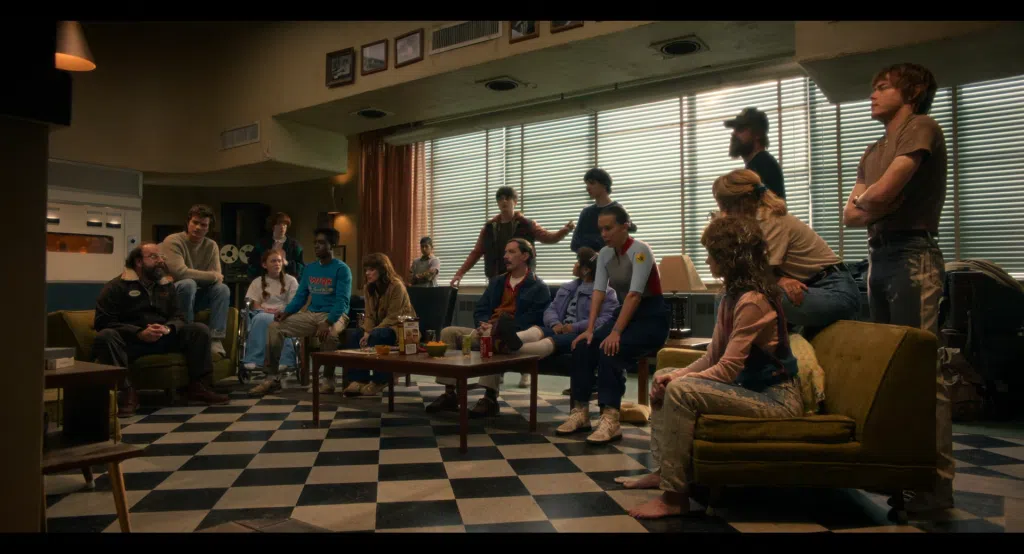
- Screenshot from Stranger Things showing a wide view of the WSQK interior and how the set strips away contemporary equipment from WPTF site that would not have existed in 1986. The open transmitter room allows for staging, blocking and group scenes while preserving the overall look of a real facility. (Netflix)
In Stranger Things, the WSQK facility is also asked to serve more than one purpose. It needs to function as a believable transmitter site, but it also needs to be a place where characters can move, talk, hide and climb. That means certain elements are adjusted or repositioned for practical reasons.
It also means that some of what happens on screen reflects the needs of the story, not the realities of operating a real broadcast facility. In the real world, transmitter sites are governed by strict safety rules. People do not climb towers without proper equipment. They do not improvise electrical work. And they certainly don’t rewire active facilities to demogorgons in the middle of a crisis.
-
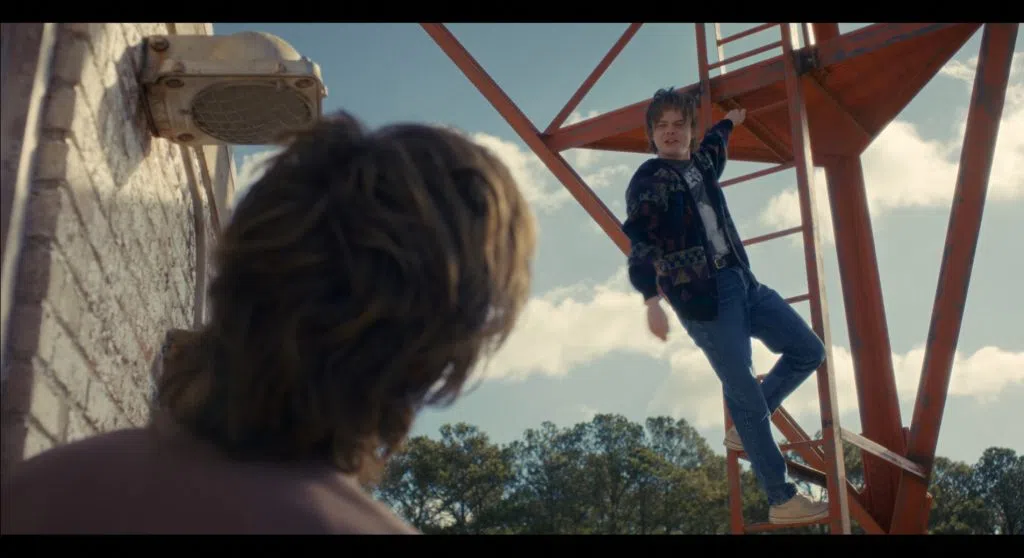
- Screenshot from Stranger Things showing Jonathan climbing the WSQK tower with no safety gear — a reminder that while the show closely mirrors the structure of a real transmitter site, the way characters interact with it is fiction. (Netflix)
-
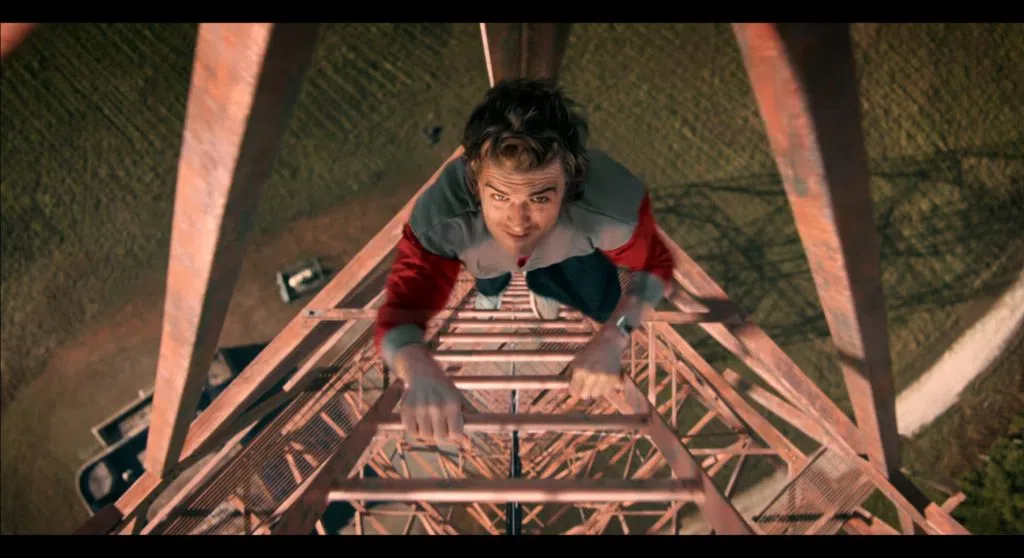
- Screenshot from Stranger Things of Steve scaling the WSQK tower ladder high above the ground. In reality, tower work at facilities like WPTF requires strict safety procedures, harnesses and trained personnel — not heroic improvisation. (Netflix)
None of that changes the underlying reference.
The building, the tower, the overall layout and the kind of space WSQK is meant to be all point back to the same source: WPTF. The changes exist to serve the story. The foundation exists because the production started from something real.
Why This Matters
Most people never see a transmitter site.
They listen to radio every day, but the places where those signals are actually created and sent out into the world are usually hidden, isolated and strictly utilitarian.
-
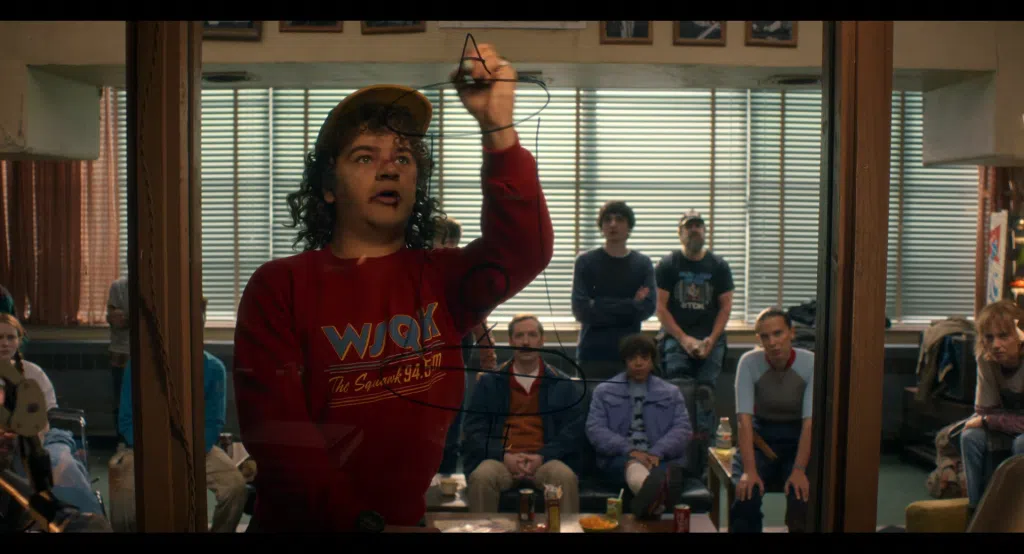
- This Stranger Things screenshot shows how characters regroup inside WSQK beneath the watchful view of the control booth overlooking the equipment room. (Netflix)
-
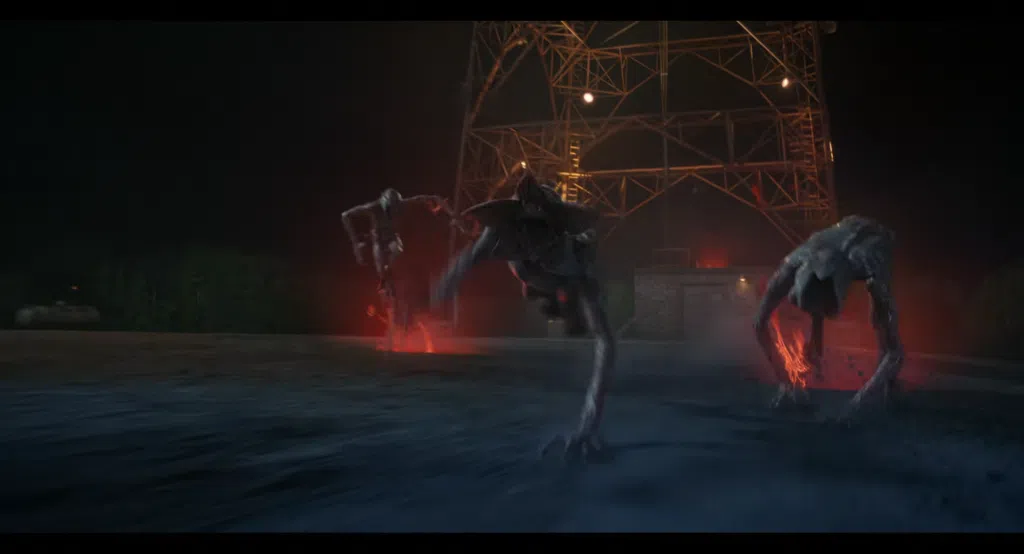
- In this screenshot from Stranger Things, action unfolds around the WSQK tower, a set design closely modeled on the real-world layout of the WPTF transmitter site. (Netflix)
Stranger Things put a version of one of those places on screen and, in doing so, showed millions of viewers a type of facility they would otherwise never encounter.
What makes this case more interesting is that the place it chose to model was not an abstract idea or a generic design. It was a real site, built for a real station and still doing real work.
A Real Place in a Fictional World
WSQK may not exist on any real FM dial, but its on-screen home is rooted firmly in reality. Every time viewers see that building, that tower or that transmitter, they are seeing echoes of a place that has been quietly doing its job for decades — sending WPTF’s signal across North Carolina.
We’re proud that a piece of WPTF’s history, engineering and physical presence helped bring one of television’s biggest shows to life. And we’re especially proud that, in a story filled with monsters and other worlds, something as real, mechanical and grounded as a radio transmitter site could still play such an important role.
About the Author
Josh Ellis began his broadcasting career as an overnight board operator for WPTF-AM in 2002. He has held a variety of roles at Curtis Media Group and currently serves as Vice President of News, where his responsibilities include the oversight and management of WPTF.