
By MATTHEW LEE AP Diplomatic Writer
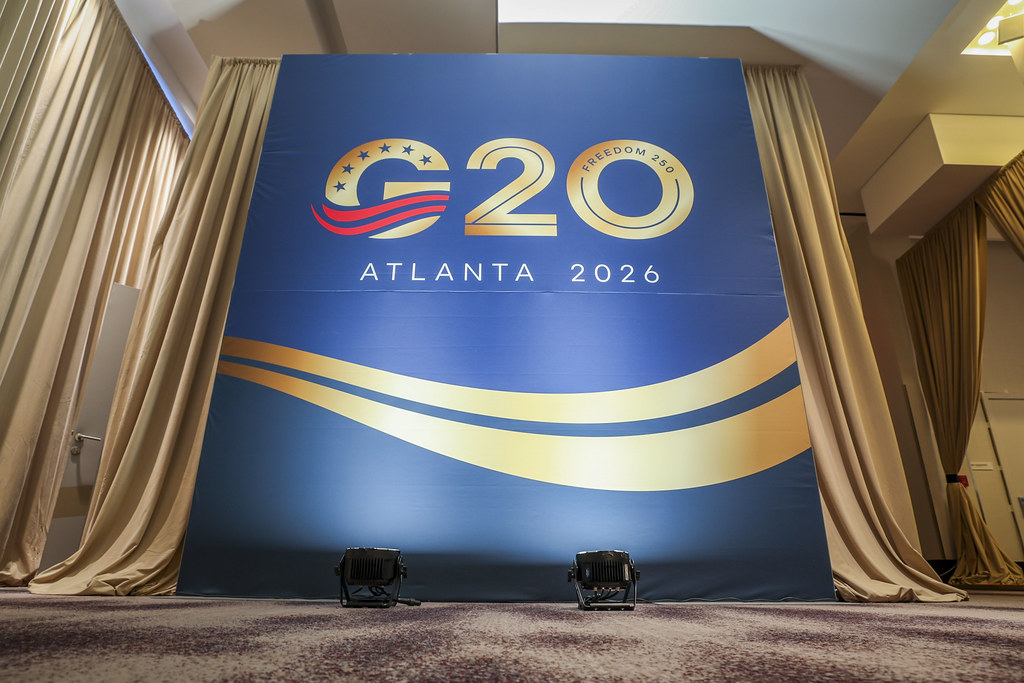
ATLANTA (AP) — Top diplomats from the Group of 20 largest world economies appeared far apart on critical global security issues as they began meeting Friday in Atlanta, after European objections to Russia’s participation forced the U.S. hosts to cancel the traditional group photo.
Secretary of State Marco Rubio pulled the plug after several European officials threatened to boycott or walk out of the snapshot that often kicks off such gatherings. But he still opened the talks with an appeal for unity on the issues that threaten international security and trade.
“We are in a critical moment,” Rubio told his colleagues. “We are facing a series of interconnected economic and geopolitical crises.”
He pointed to disruptions to global energy and food supplies, trade and freedom of navigation and said many are posing “severe threats to essential foundations of the global economic order.”
Yet there was no sign that the G20 diplomats could come to consensus on many of the most contentious issues they face. Among them are the Russia-Ukraine conflict, the U.S.-Israeli war against Iran, U.S. tariffs and Chinese machinations in the South China Sea. All have contributed to spikes in the global cost of fuel as well as uncertainty about trade.
Diplomats who attended the opening session described it as cordial but said Russia’s position on Ukraine is unyielding — as is its opposition to Poland’s membership in the G20.
Those disagreements, which also cover the Trump administration’s not inviting G20 member South Africa over the objections of others, will likely prevent the foreign ministers from producing a joint communique when the meetings wrap up on Saturday, participants said.
Several participants, who spoke on condition of anonymity because they weren’t authorized to discuss the closed-door talks, said all had agreed to try to overcome their differences despite the long odds and to work to make next month’s G20 leaders summit hosted by Trump in Florida a success.
Russia’s presence at G20 gathering roils Europeans
Poor prospects for the talks escalated when the Europeans balked at being photographed with Russia Foreign Minister Sergey Lavrov. Rubio decided to scrap the picture because he thought the controversy would be a distraction, according to two U.S. officials, who spoke on condition of anonymity due to the sensitivity of the matter.
Some G20 countries had already expressed concern that the U.S. invited Russia during its heightened attacks on Ukraine, especially after Trump pushed ties with Ukraine to new lows by waiving fresh sanctions on Moscow and temporarily limiting logistical and intelligence assistance.
However, the State Department announced Friday that it had approved a proposed $2.1 billion sale of Patriot air defense interceptors for Ukraine.
British Foreign Secretary Ed Milliband explicitly called out Lavrov, saying that “if we are serious about our values and our interests we must also work harder to secure just and lasting peace in Ukraine.”
“An assault not only on Ukraine but on us all — trampling international law, sovereignty and self determination — core principles on which we all depend,” he said.
Polish Deputy Prime Minister and Foreign Minister Radosław Sikorski told reporters in Atlanta that “I am not the only one who does not want to be photographed with Lavrov.”
German Foreign Minister Johann Wadephul said “there is no normality with Russia” but “we must exchange the controversies at the table here,” the German news agency dpa reported. He added that “we also must not send falsely optimistic signals.”
Lavrov has traveled only infrequently to NATO member states since Russia invaded Ukraine in February 2022 and resulting severe sanctions were imposed on Moscow. His presence in Atlanta could cause domestic political problems for Trump just days before the U.S. congressional midterm elections as well as roil the G20, according to Ian Kelly, a U.S. ambassador to Georgia during Trump’s first term.
“It seems politically boneheaded to invite him,” said Kelly, who now teaches international relations and diplomacy at Northwestern University.
It is unclear if Russian President Vladimir Putin will accept Trump’s invitation to attend the G20 leaders summit at his Miami golf club in December.
G20 member South Africa was not invited
Ukraine, which is not a G20 member but was invited to attend previous such meetings, was not invited this year as U.S. officials said they made a conscious choice to include only formal members of the group.
But missing from the invite list was South Africa, a G20 founding member and the only African country in the group. South Africa is embroiled in several bitter disputes with the Trump administration, and when it chaired the G20 last year, top U.S. officials, including Trump and Rubio, shunned the meetings it hosted.
“We have consistently maintained that our nonparticipation is not voluntary,” said Phindile Kunene, spokesperson for South African Foreign Minister Ronald Lamola.
Kunene welcomed support from other G20 members that had expressed reservations about the exclusion and said South Africa was ready to participate “on an equal footing with other members” when Britain takes over the presidency next year.
The Iran war hangs over the G20 event
The U.S. has said a top priority for the meeting is resolving differences over issues related to freedom of navigation, particularly in the Strait of Hormuz, the Red Sea, the Black Sea and the South China Sea. The topic will include discussions on Iran, Russia-Ukraine and China and its smaller neighbors.
But hanging over the meeting is the prospect of new U.S. military intervention in Iran, which has put the region, including G20 member Saudi Arabia, on edge. Rubio met on the sidelines with his Saudi counterpart, Prince Faisal bin Farhan, as well as Turkish Foreign Minister Hakan Fidan, whose country has been a key mediator.
The Associated Press has reported that U.S. officials have told several Middle East countries and regional allies to be prepared for potential renewed military strikes against Iran after Tuesday’s midterm elections and the possibility that Iran will retaliate against them.
___
Associated Press writers Michelle Gumede in Johannesburg, South Africa, Claudia Ciobanu in Warsaw, Poland, Geir Moulson in Berlin, Jill Lawless in London and Farnoush Amiri in New York contributed.